Nilagiri, Kaptipada, Khunta, Udala; Mayurbhanj and Balasore, Odisha
Unnat Krushi Kendra (UKK)
A network of village-level farmer service centres built around locally trained agripreneurs, giving smallholder tribal farmers access to organic inputs, quality seeds, demonstration farms, and market linkages, and still running six years after the project closed.


Attribute
Details
📍 Location
Nilagiri, Kaptipada, Khunta, Udala; Mayurbhanj and Balasore, Odisha
🏛 Funder
ONGC Ltd.
👥 Beneficiaries
4,200+ farmers registered
📅 Duration
Oct 2018 to Sep 2020 (extended by 4 months post-Cyclone Fani)
🌱 Focus Area
Climate-Resilient Agriculture
In Balasore and Mayurbhanj, where Scheduled Tribe and Scheduled Caste households make up close to seventy percent of the farming population, agricultural life had long meant subsistence: paddy and vegetables grown with chemical inputs bought on credit, sold at whatever the nearest market would offer. Poor-quality seed, scarce irrigation, limited technical knowledge, and no real route to market were the common conditions across every block. The UKK model was designed not to import solutions into this landscape, but to grow them locally.
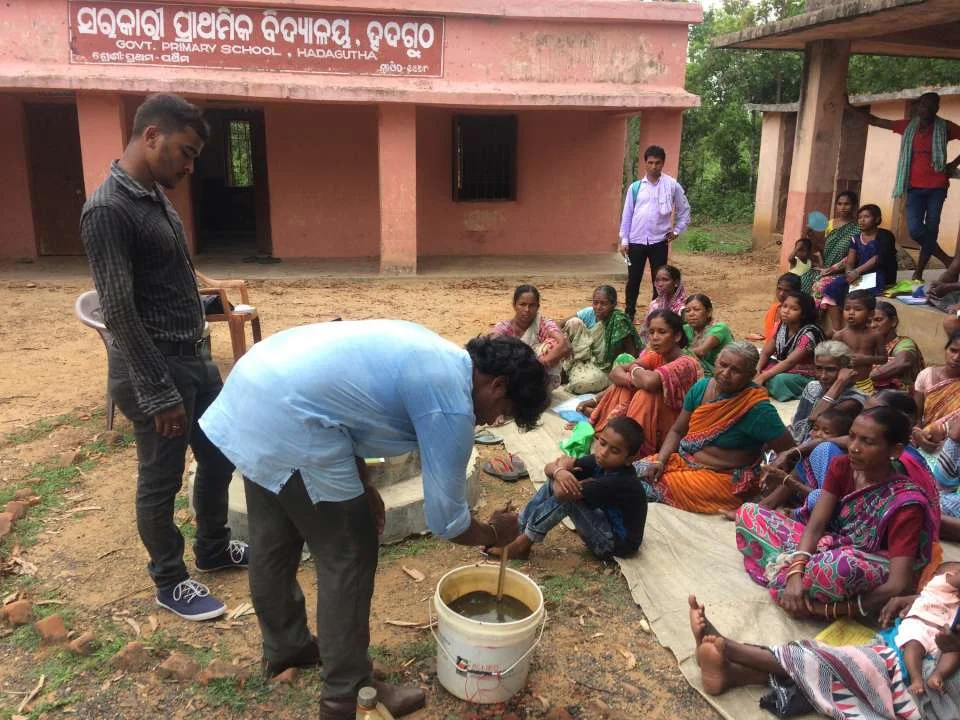
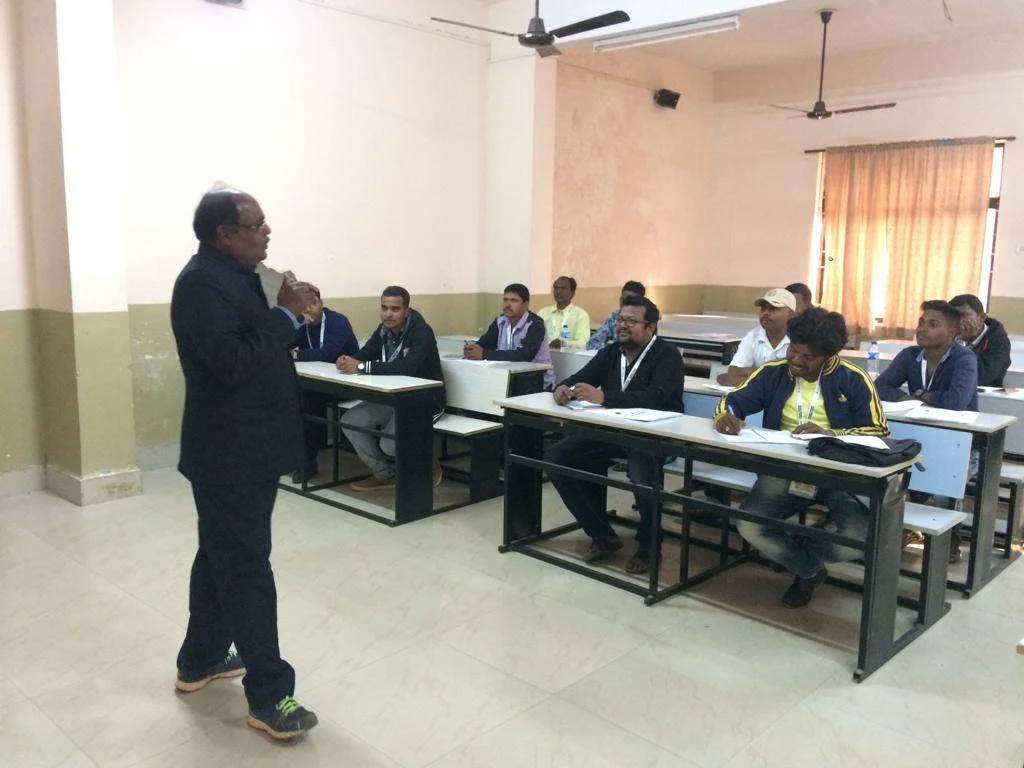
B2V identified educated rural youth across four blocks, put them through twelve days of intensive residential training covering organic farming, agri-business, accounting, marketing, and ICT, and supported each one to establish a kendra on one to five acres of their own or leased land. Eight centres were built across Nilagiri in Balasore and Kaptipada, Khunta, and Udala in Mayurbhanj, coordinated from a nodal office at Udala. Each centre was designed as a genuine one-stop resource: an office and meeting point, a demonstration farm with composting and Azolla units, multi-tier vegetable beds, a seed and input shop, and an active market linkage. An exposure visit to Sambhav, a renowned organic farm in Nayagarh, was built into training to ground each agripreneur in what a functioning organic enterprise actually looks like. Between them, the eight centres registered 4,200+ farmers and delivered over 12,600 training man-days across the programme period.
Most project stories end at handover. UKK's most significant finding came six years later. When B2V conducted field assessments in 2026, a meaningful share of the centres were still operational, run entirely by the local entrepreneurs the project had trained, without any external funding or organisational support.

At Brundaban Chandrapur in Khunta, Gorachand Singh's kendra remains open seven days a week, serving 500+ farmers across ten villages. Monthly income has grown from roughly Rs 9,000 at project close to approximately Rs 10,000 in 2026, the centre now receives support from the State Agriculture Department, and a demonstration plot is being readied for a fresh season. In Kaptipada, Bamia Singh's centre continues as an active seed point, trading Kerala Sundari paddy seed to around sixty farmers across fifteen villages and earning approximately Rs 42,000 in 2025. In Nilagiri, Asim Mohanty runs a rice-seed business earning around Rs 10,000 in monthly profit. The farmers introduced to high-yielding desi varieties like Kerala Sundari saw yields roughly double in places, alongside reduced input costs from the shift to organic methods.
What the UKK experience demonstrates is that community-based livelihood centres can sustain themselves after formal project closure when the people running them have been equipped not just with infrastructure, but with a business. The market instinct, supplier relationships, and confidence to trade that the project developed in its agripreneurs have outlived the funding that created them. For B2V, this is the single most telling result in its portfolio: the intervention did not simply stop when the project did.



Explore More Case Studies

Value Addition and Market Linkage Training
Building post-harvest value addition capacity among tribal farmers across five districts of Odisha through crop-specific training programmes covering nine agricultural and forest produce categories.

Organic Vegetable Cultivation and Market Linkage
Training smallholder farmers in organic vegetable production, establishing a primary processing centre, and creating direct market linkages to improve farmer incomes in Bihar.

Dhokra Handicraft Training and Market Linkage
Rebuilding a centuries-old tribal metal casting tradition in Dhenkanal by strengthening skills, shared infrastructure, design innovation, and direct market access for artisans who had nearly stopped practicing altogether.


