
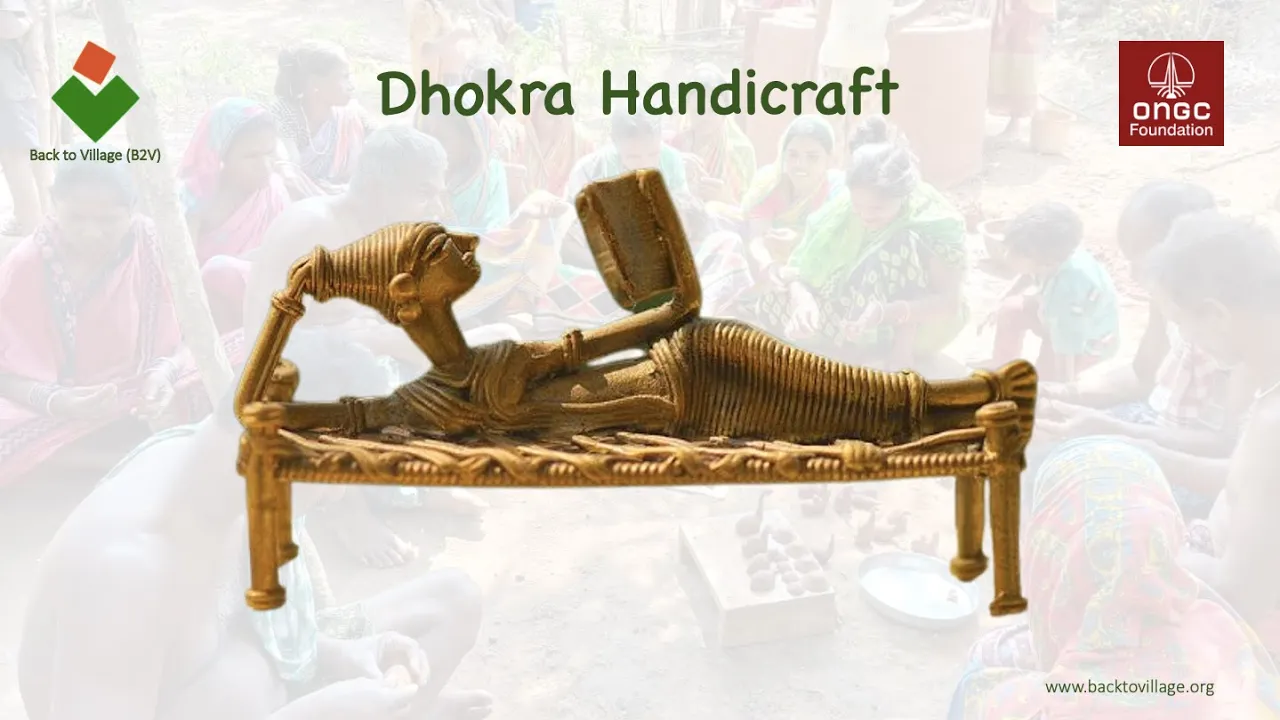
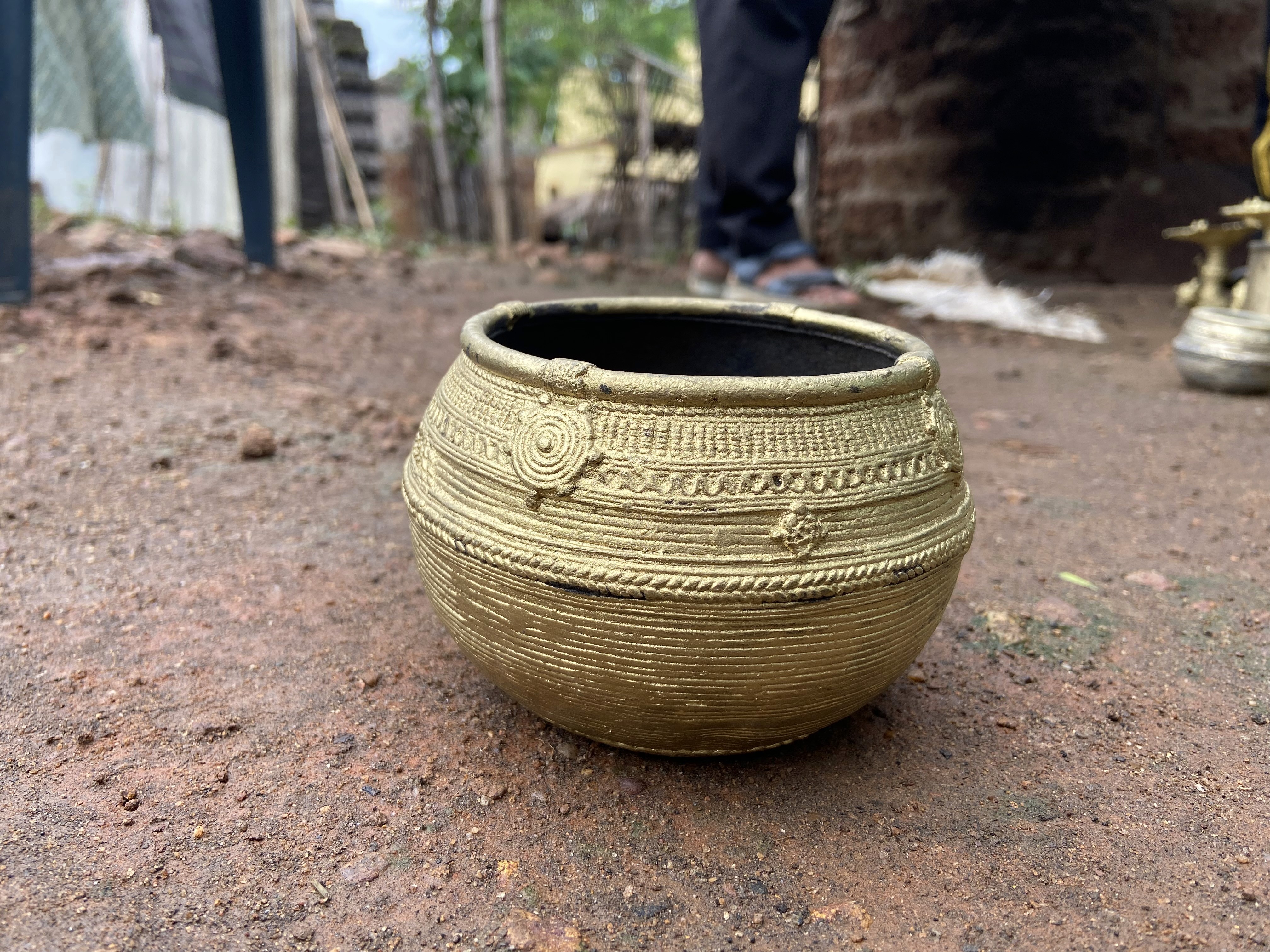
Nuagaon and Nathua, Dhenkanal, Odisha
Dhokra Handicraft Training and Market Linkage
Rebuilding a centuries-old tribal metal casting tradition in Dhenkanal by strengthening skills, shared infrastructure, design innovation, and direct market access for artisans who had nearly stopped practicing altogether.

Attribute
Details
📍 Location
Nuagaon and Nathua, Dhenkanal, Odisha
🏛 Funder
ONGC Foundation
👥 Beneficiaries
100
📅 Duration
Nov 2021 to Oct 2022
🌱 Focus Area
Indigenous Knowledge Systems
When B2V began the Dhokra Craft Project in Dhenkanal, the situation in Nathua village had reached a critical point. Artisans there had stopped making Dhokra craft entirely for eight years, driven out by poor returns and dependence on middlemen who captured most of the value their skill created. In the neighbouring village of Nuagaon, craft practice had continued but earnings remained low, designs had not evolved in years, and there was no reliable path to buyers beyond occasional exhibitions. The talent existed; the system around it had failed.
From 187 interested artisans, 90 were selected and organised into six training groups, split equally between experienced artisans and beginners. Forty-five experienced artisans received support in new design development, production quality, and market-ready finishing, while 45 beginners received foundational craft training delivered by senior artisans within the community, keeping knowledge transfer local. Ten young entrepreneurs were selected separately for training in branding, marketing, accounting, IT, and social media, creating a commercial layer within the community that the craft had never had before. A Common Facility Centre was established and equipped with polishing machines, improved furnaces, grinders, and safety equipment, run on a fee-for-use model by the entrepreneur cohort to ensure its sustainability beyond the programme period. Packaging was overhauled from loose polythene to cloth bags, tags, and boxes, and the "Dhe Dhokra" brand was created with product photography, cataloguing, and online listings. Artisans participated in exhibitions in Bhubaneswar, Delhi, Bhopal, and Cuttack, and direct trade linkages were established with buyers including Anwesha and Kala Kart.
The intervention produced measurable and sustained results. Selling prices for Dhokra products increased by 50 percent, with net incomes rising proportionately for participating artisans. Women who had previously been engaged in low-paid or household work began earning independently through Dhokra production. Young people who had been unemployed prior to the programme entered the craft through polishing, clay mixing, raw material procurement, and eventually production and sales. In Nathua, where the furnaces had been cold for eight years, craft practice resumed and has continued.
Three years after programme completion, the results have held. Artisans are still producing, still selling, and still teaching the craft to younger community members. Market channels that did not exist before the programme, including direct sales, exhibition participation, and buyer relationships with Kala Kart and other traders, remain active. The Common Facility Centre continues to operate. The programme's deeper achievement is not the income it generated during its operating year, but that it converted a fragile, irregular activity into an organised livelihood capable of sustaining itself. The furnaces in Dhenkanal kept burning because the project left behind confidence, working systems, and a community with a reason to continue.




Explore More Case Studies

Value Addition and Market Linkage Training
Building post-harvest value addition capacity among tribal farmers across five districts of Odisha through crop-specific training programmes covering nine agricultural and forest produce categories.

Organic Vegetable Cultivation and Market Linkage
Training smallholder farmers in organic vegetable production, establishing a primary processing centre, and creating direct market linkages to improve farmer incomes in Bihar.

Micro-Agripreneurs Training Program
Building agri-entrepreneurship capacity among rural tribal youth across four districts of Odisha through intensive residential training covering organic farming, business fundamentals, ICT skills, and real-world farm exposure.


