
Indigenous Knowledge Systems
Centuries of place-specific ecological intelligence, disappearing in one generation. B2V documents, validates, and integrates this knowledge into climate adaptation, treating it as rigorous evidence rather than heritage alone.
Livelihood models that make staying in the village a real economic choice. Co-designed with communities, market-linked, and built to operate without ongoing NGO support.

THE CHALLENGE
Tested climate intelligence, disappearing in one generation
Four Pillars of Climate-Resilient Farming.
India's tribal and other local communities hold centuries of calibrated ecological knowledge: how soils behave across seasons, how water moves through their landscapes, which plants heal and which indicate soil stress. It is place-specific in ways generic science cannot replicate. And it is disappearing. That loss is not merely a cultural one. It is also, and very significantly, a climate adaptation crisis, and B2V works on it as both.
We apply the same evidence standards to IKS as to any field observation, because that is the only approach that produces evidence policymakers can act on.
We do not romanticise traditional knowledge. We validate it. Where it validates, we integrate it. Where it does not, we say so. Communities deserve honesty as much as respect.
B2V's Position

WHAT WE DO
Three Domains of Indigenous Knowledge Work
The three domains where climate adaptation relevance is highest and evidence gaps are largest.

Traditional Water Management
Rainfall reading, seasonal water prediction, and community-governed harvesting structures calibrated to specific local landscapes. Several validated practices are integrated into B2V's Community Water Harvesting Model.
Traditional Water Management
Rainfall reading, seasonal water prediction, and community-governed harvesting structures calibrated to specific local landscapes. Several validated practices are integrated into B2V's Community Water Harvesting Model.

Traditional Water Management
Rainfall reading, seasonal water prediction, and community-governed harvesting structures calibrated to specific local landscapes. Several validated practices are integrated into B2V's Community Water Harvesting Model.

Soil & Land Management
Multi-layer cropping, natural soil amendments, and fallow sequences from generations of observation. IKS soil practices from Odisha and Jharkhand validated better moisture retention in comparative tests, directly informing our Natural Farming model.
Soil & Land Management
Multi-layer cropping, natural soil amendments, and fallow sequences from generations of observation. IKS soil practices from Odisha and Jharkhand validated better moisture retention in comparative tests, directly informing our Natural Farming model.

Soil & Land Management
Multi-layer cropping, natural soil amendments, and fallow sequences from generations of observation. IKS soil practices from Odisha and Jharkhand validated better moisture retention in comparative tests, directly informing our Natural Farming model.

Medicinal & Functional Plants
Traditional knowledge around healing plants and their integration into farming systems as multi-use crops. The Brahmi cultivation model, now a validated intercrop in our Natural Farming protocol, emerged directly from this domain.
Medicinal & Functional Plants
Traditional knowledge around healing plants and their integration into farming systems as multi-use crops. The Brahmi cultivation model, now a validated intercrop in our Natural Farming protocol, emerged directly from this domain.

Medicinal & Functional Plants
Traditional knowledge around healing plants and their integration into farming systems as multi-use crops. The Brahmi cultivation model, now a validated intercrop in our Natural Farming protocol, emerged directly from this domain.
OUR WORK
See How We’re Powering Change

Dhokra Handicraft Training and Market Linkage
Rebuilding a centuries-old tribal metal casting tradition in Dhenkanal by strengthening skills, shared infrastructure, design innovation, and direct market access for artisans who had nearly stopped practicing altogether.

Medicinal and Aromatic Plants Cultivation
Developing a full cultivation-to-market ecosystem for medicinal and aromatic plants on fallow community land, using natural farming methods and a local FPO as an active delivery partner.
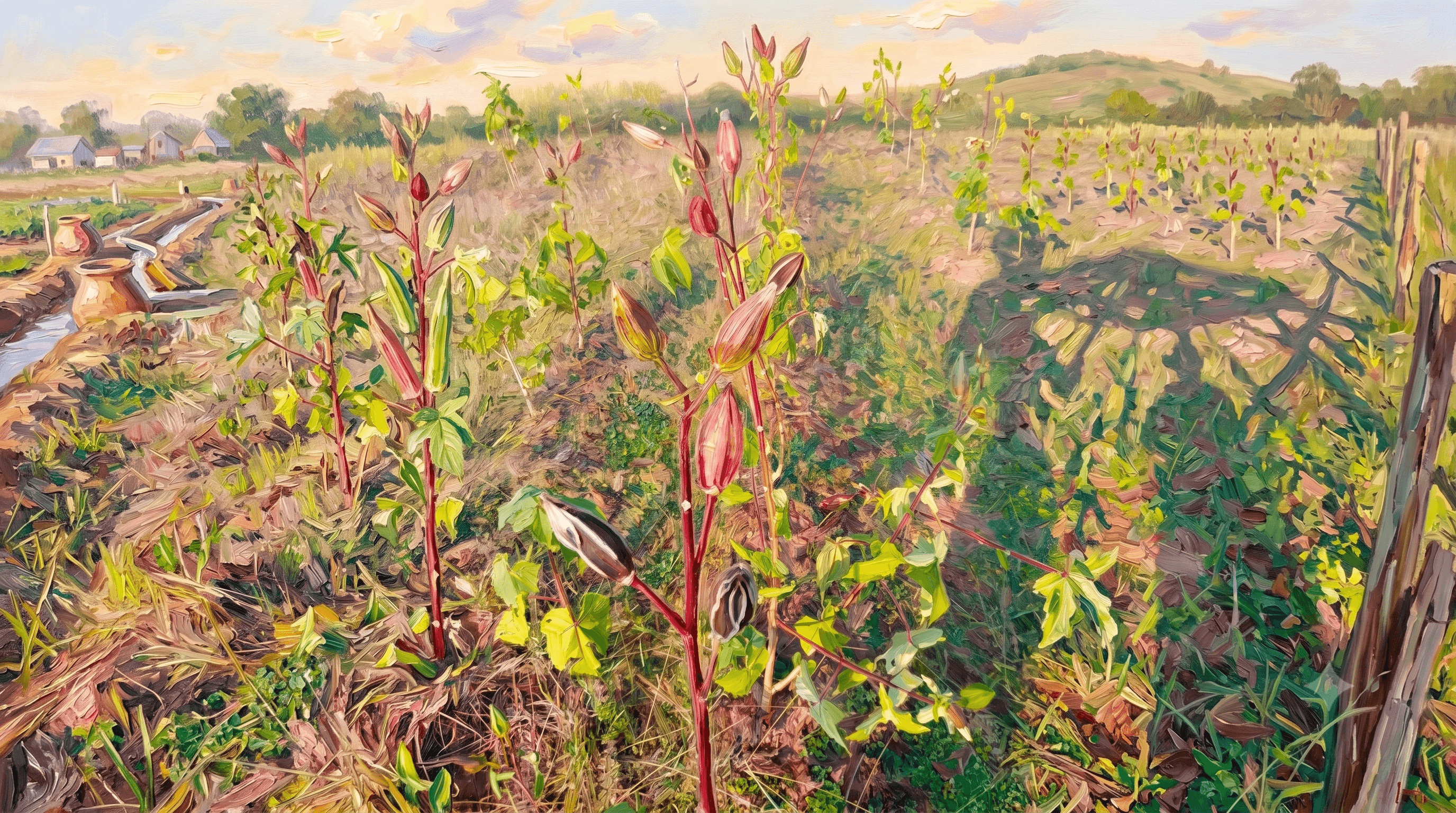
Medicinal Plants Cultivation and Market Linkage
Promoting commercially viable medicinal plant species among rural farming communities while replenishing depleted wild stocks in Odisha's forest fringe villages.
Explore more Impact Stories
Explore more Impact Stories
FAQs
Got questions?
We are here to make B2V easy to understand. Find answers to the most common questions below.
Still got questions?
How We Work
Impact & Research
Partner With Us

There is a persistent gap in rural climate work between the research that shapes policy and the implementation that happens in villages. B2V exists to close it, which is why we do both. Our field programmes generate real-world evidence, while our research helps improve implementation, inform policy, and enable others to replicate what works. Every intervention is an opportunity to learn, and every insight is used to improve outcomes for communities.
B2V combines long-term field implementation with rigorous research. We co-create models with communities, validate them across multiple locations, and continuously refine them using evidence. We build this work with others as much as with communities, partnering with government departments, fellow NGOs, research institutions and funders so that a model proven in one district can travel to the next. Our work spans climate resilience, regenerative agriculture, rural livelihoods, water security, entrepreneurship, and community institutions, allowing us to address interconnected challenges rather than isolated problems.
Communities are collaborators, not subjects. They help identify problems, shape solutions, test interventions, and provide continuous feedback throughout implementation. We work the same way with our partners, collaborating with local NGOs, community institutions, government line departments and research bodies at every stage. This participatory approach keeps our research practical, locally relevant, and grounded in lived experience.
Yes, where there is strategic alignment, strong local partnerships, and community readiness. We believe expansion should be intentional rather than opportunistic, ensuring that new programmes maintain the same quality, relevance, and long-term commitment as our existing work.
FAQs
Got questions?
We are here to make B2V easy to understand. Find answers to the most common questions below.
How We Work
Impact & Research
Partner With Us
There is a persistent gap in rural climate work between the research that shapes policy and the implementation that happens in villages. B2V exists to close it, which is why we do both. Our field programmes generate real-world evidence, while our research helps improve implementation, inform policy, and enable others to replicate what works. Every intervention is an opportunity to learn, and every insight is used to improve outcomes for communities.
B2V combines long-term field implementation with rigorous research. We co-create models with communities, validate them across multiple locations, and continuously refine them using evidence. We build this work with others as much as with communities, partnering with government departments, fellow NGOs, research institutions and funders so that a model proven in one district can travel to the next. Our work spans climate resilience, regenerative agriculture, rural livelihoods, water security, entrepreneurship, and community institutions, allowing us to address interconnected challenges rather than isolated problems.
Communities are collaborators, not subjects. They help identify problems, shape solutions, test interventions, and provide continuous feedback throughout implementation. We work the same way with our partners, collaborating with local NGOs, community institutions, government line departments and research bodies at every stage. This participatory approach keeps our research practical, locally relevant, and grounded in lived experience.
Yes, where there is strategic alignment, strong local partnerships, and community readiness. We believe expansion should be intentional rather than opportunistic, ensuring that new programmes maintain the same quality, relevance, and long-term commitment as our existing work.
Still got questions?
FAQs
Got questions?
We are here to make B2V easy to understand. Find answers to the most common questions below.
How We Work
Impact & Research
Partner With Us

There is a persistent gap in rural climate work between the research that shapes policy and the implementation that happens in villages. B2V exists to close it, which is why we do both. Our field programmes generate real-world evidence, while our research helps improve implementation, inform policy, and enable others to replicate what works. Every intervention is an opportunity to learn, and every insight is used to improve outcomes for communities.
B2V combines long-term field implementation with rigorous research. We co-create models with communities, validate them across multiple locations, and continuously refine them using evidence. We build this work with others as much as with communities, partnering with government departments, fellow NGOs, research institutions and funders so that a model proven in one district can travel to the next. Our work spans climate resilience, regenerative agriculture, rural livelihoods, water security, entrepreneurship, and community institutions, allowing us to address interconnected challenges rather than isolated problems.
Communities are collaborators, not subjects. They help identify problems, shape solutions, test interventions, and provide continuous feedback throughout implementation. We work the same way with our partners, collaborating with local NGOs, community institutions, government line departments and research bodies at every stage. This participatory approach keeps our research practical, locally relevant, and grounded in lived experience.
Yes, where there is strategic alignment, strong local partnerships, and community readiness. We believe expansion should be intentional rather than opportunistic, ensuring that new programmes maintain the same quality, relevance, and long-term commitment as our existing work.
Still got questions?
Are you ready to work with B2V?
Whether you are a funder, government partner, peer NGO, or researcher, there is a clear pathway to collaborate.


© 2026 | Back to Village (B2V)
Are you ready to work with B2V?
Whether you are a funder, government partner, peer NGO, or researcher, there is a clear pathway to collaborate.
© 2026 | Back to Village (B2V)
Are you ready to work with B2V?
Whether you are a funder, government partner, peer NGO, or researcher, there is a clear pathway to collaborate.
© 2026 | Back to Village (B2V)